Kent, WA
Garage Door Cable and Roller Repair in Kent
One cable slack, one taut, and the door sitting crooked. Cables carry the door's whole weight to the spring, so this one does not wait.
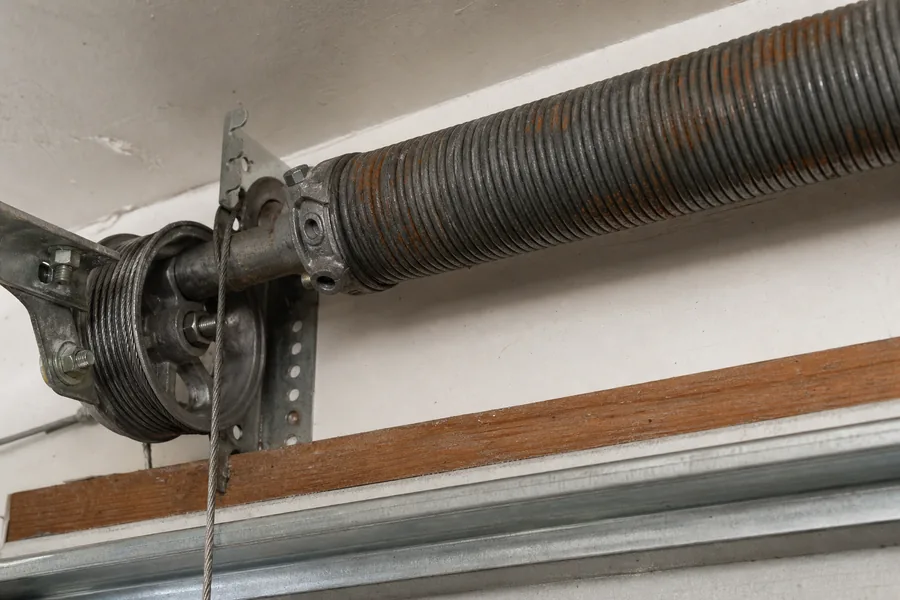
One cable slack, one taut, and the door sitting crooked. Cables carry the door's whole weight to the spring, so this one does not wait.
Most garage door cable and roller repair calls we take in Kent start the same way - the door moved fine yesterday. That is normal. The components that fail are load-bearing, and load-bearing parts fail suddenly rather than gradually. In Kent, constant damp swells wooden panels and rusts spring coils, which is why we carry the parts for it on the van rather than ordering them in.
Two cables run from the bottom brackets, up the sides, and wind onto drums at each end of the torsion shaft. They are what actually carries the door's weight to the spring. If one lets go, the door drops on that side, jams in the track and comes off the rails - which is why a cable failure and an off-track door usually arrive as one call.
The van covers Kent and Renton, Auburn, Federal Way, Tukwila daily. You get a two-hour window rather than a day, a free written estimate, and a price that does not move between the driveway and the invoice.
A cable warns you before it goes. Run your eye along its length: broken strands stand out from the lay of the wire like whiskers, usually near the bottom. Compare the two sides - one slack while the other is tight means a cable has already slipped its drum. And if the door has started closing crooked, it is past the warning stage.
If any of that matches, a technician can diagnose it on site in about ten minutes. We do not guess at it down the phone, and we do not charge to look.
A galvanized cable lasts as long as its coating does. The end that sits at the bottom bracket lives closest to a floor that gets wet, so that is where the zinc goes first, and that is where the strands start to part. Rollers are a shorter story: the unsealed plastic ones builders fit have no bearings worth the name and are finished inside seven years.
Cables are replaced in pairs, because they have worn the same amount and the drums have to be set equally or the door will never sit level. Nylon rollers with sealed ball bearings are the upgrade worth having - quieter, and they outlast the plastic ones several times over.
A roller that has seized takes the track with it, so a roller replacement that is left too long turns into a track repair. If we are already there for a cable, changing the rollers at the same time costs the parts and almost no extra labor.
None of this involves touching anything under tension, and all of it makes the phone call shorter and the estimate more accurate. Two minutes in the garage with the door down is enough.
Whatever you find, do not try to correct it. The value is in the description you give us, not in the repair - a technician arriving in Kent who already knows what failed arrives with the right part on the van.
Below is the actual scope of a garage door cable and roller repair, so you can hold any estimate - ours included - against it.
None of that is optional or extra. It is what the job is, and it is why we would rather quote in writing on site than call out a number over the phone.
Kent is the base and the surrounding towns are within the normal working radius. These are the areas the van is in most days:
Emergency and after-hours calls run to the same map. A door standing open overnight anywhere on that list gets somebody out.
Constant damp swells wooden panels and rusts spring coils. Put that against a mechanism made of wound steel, galvanized cable and nylon bearings and the outcome is not mysterious.
Corrosion is the quiet one. A spring that has picked up surface rust has lost section where the rust sits, and stress concentrates exactly there. It does not squeak or warn you - it simply fails earlier than its cycle count says it should.
Temperature is the loud one. Steel is a little less forgiving cold than warm, so a spring at the end of its life picks the coldest morning of the month to go. That is why the phone in King County rings hardest before eight.
Neither is a reason to buy a different door. It is a reason to service the one you have before the season that will break it, and to size the replacement parts for Kent rather than for a catalog.
The bottom bracket is the one fitting on a garage door that carries the entire spring load, and on most doors there is a warning label on it saying so. Undo that bolt with the counterbalance still wound and the whole system releases at once, through whatever is in the way. This is not a cautious-and-you-will-be-fine job.
The general rule with a door that has failed is to stop using it. Every extra cycle you put through a door with a broken counterbalance transfers load onto parts that were never meant to carry it, and the repair gets more expensive with each attempt.
If you need the car out before we arrive, release the opener with the red cord only when the door is fully down, and lift with both hands and a straight back. If the door does not move easily, leave it - it is telling you the counterbalance is gone.
These are the variables. They are the reason a number given down the phone by somebody who has not seen your door is a guess, and the reason the visit is free.
| Factor | Why it matters |
|---|---|
| Rust extent | Surface rust on a cable is a replacement. Rust into the bottom bracket is a bracket as well. |
| Cable gauge | It is matched to door weight. Heavier cable on a light door is not an upgrade, it is a drum that will not wind cleanly. |
| Shaft play | A shaft with movement in the center bearing eats cables. Worth checking while everything is apart. |
| Bottom bracket condition | Corroded bottom brackets get replaced. They are under full spring load and they are not a part to leave. |
| Roller grade | Unsealed plastic, sealed nylon or steel ball-bearing rollers are three prices and three service lives. Nylon is the sensible middle. |
The technician goes through whichever of those apply to your door before writing the estimate, so the number you are given is the number on the invoice.
Constant damp swells wooden panels and rusts spring coils. Split by component, the effect is not evenly distributed:
| Part | What the local climate does to it |
|---|---|
| Torsion spring | Surface corrosion removes section, stress concentrates there, and the spring fails short of its cycle rating. |
| Lift cables | Rust starts at the bottom bracket end, closest to the floor, and works up the lay of the wire. |
| Rollers | Grit and moisture together destroy unsealed bearings; sealed nylon rollers are largely immune. |
| Bottom seal | Hardens, cracks, and stops sealing - after which the weather is inside the garage rather than outside it. |
| Opener | Suffers indirectly. Every one of the above makes the door heavier to move, and the nylon drive gear is what pays for it. |
None of it is exotic and none of it needs a special product. It needs looking at twice a year, which is the part most people in Kent skip.
The call itself takes about three minutes. We ask what the door is doing, what it sounds like, whether anything is visibly out of place, and roughly how old it is. That is usually enough to know which parts the van needs.
Loading the van from that description is the part that decides whether your garage door cable and roller repair is a one-visit job or a two-visit job. It is also the part a national dispatch number cannot do, because it does not know who is coming.
On site the technician confirms the diagnosis on the door. Sometimes the phone description was wrong - a 'broken opener' is quite often a broken spring - and it is better to find that out with the parts already in the van.
The estimate is written before work starts. The repair itself is usually under two hours, and the door is tested and balanced before anyone leaves.
Three things are worth checking on any quote you get in Kent, ours included.
First, what cycle rating is the spring? A 10,000-cycle spring and a 25,000-cycle spring look identical on an invoice line that says 'spring'. The second costs a little more and lasts more than twice as long, and you are entitled to be told which one you are getting.
Second, is the price fixed or 'from'? A number given over the phone by somebody who has not seen the door is a number that can change once they are standing in your garage. Ours is written down on site and does not move.
Third, what happens if you say no? A free estimate should mean free - no trip charge, no diagnostic fee, no call-out recovered on the way out. If that is not spelled out, ask before they set off.
Usually, yes. We hold same-day slots for Kent and the surrounding towns, and a door stuck open or a car shut in goes to the front of the list.
Yes, in writing, on parts and labor. If the same fault returns inside the warranty period we come back and put it right at no charge.
A galvanized cable lasts as long as its coating does. The end that sits at the bottom bracket lives closest to a floor that gets wet, so that is where the zinc goes first, and that is where the strands start to part. Rollers are a shorter story: the unsealed plastic ones builders fit have no bearings worth the name and are finished inside seven years.
If a spring or cable has failed, no. Leave it down and do not force it. The counterbalance holds a great deal of stored energy and it can let go without warning.
Yes - Renton, Auburn, Federal Way, Tukwila and the wider King County area are all inside our normal service radius.
A roller that has stopped turning does not stay a roller problem. It drags, and what it drags is the track, so a cheap part left too long becomes a track section and a realignment. If the van is already there for a cable, the rollers cost parts and almost no extra labor.
If the door in your Kent garage is doing any of the things on this page, the fastest route to an answer is a phone call. Describe what it is doing and you will get a straight opinion on whether it needs somebody today or whether it can wait.
No call center, no booking fee, and no charge for the visit or the estimate. We cover Kent and Renton, Auburn, Federal Way, Tukwila.
Name, number and what the door is doing is enough. Everything before the price is agreed costs you nothing, across the whole of King County.
Prefer to talk it through? Call (253) 369-1502.
One flat bang overnight and the door will not lift. The spring is what cancels the door's weight, and when it goes the opener cannot take over.
What this costs and how fast →Before you buy a new one: an opener that strains is usually reporting a spring problem, not an opener problem. Replacing the head will not fix that.
What this costs and how fast →Rollers reseated, hinges checked for the damage a derailment hides, and the track trued against a level. Then we find what put it there.
What this costs and how fast →Door stuck open overnight, or the car shut in. Same-day and after-hours, with the common parts already on the van.
What this costs and how fast →When the panels are past saving. Measured for headroom, track set plumb, counterbalance sized to the finished door - not to the invoice.
What this costs and how fast →